Free · Browser 4X · No download

Begin alone.
Light the beacon
when you are ready.

You wake in a sealed birth cluster. One world, a dormant beacon, and no other commander who can reach you while that cluster is sealed.

Build a system. Survive what is already out there. Then decide, on your own schedule, whether to light the beacon and leave that private opening for the shared galaxy.

A dark, unlit beacon tower on the night side of a world, seen from orbit against the galactic band.
Chapter 00 — Before the Signal

Four things happen, in this order

Not a tutorial you skip. This is the game — and none of it requires another player to show up.

01

Begin alone

Your birth cluster is sealed. No raids from established empires, no alliance politics, no one scanning you for weakness — the birth cluster itself is private until you emerge.

Sealed is not the same as safe. The dark is already occupied, and the first thing that comes for you is local.

A single small settlement under construction on an empty world, its sparse amber work lights surrounded by darkness.

02

Build one system, properly

Not a scatter of identical colonies. One hub — a full world that holds the system's stores — and chartered annexes around it: a mining rig on a moon, a sensor post out at the rim, a shipyard on a rock nobody could live on.

The hub coordinates resources and power across its annexes, so a world too harsh for a city can still be a useful mine.

A colony ship approaching a cratered moon while a lit hub glows on the world below.

03

Prove what survives

A pirate hulk waits in your home system, and its raiders can come for you. Beat its shields down and board it, and the wreck-built orbital station can become yours.

Every battle is fought at range. Weapons that cannot reach the distance you are fighting at contribute nothing. Fleet composition matters alongside raw ship count.

A corvette firing on a pirate hulk station marked with hostile orange telemetry arcs.

04

Light the beacon — or don't

The Cold Fusion Beacon is the door to everything social: trade, diplomacy, guilds and the shared galaxy. Lighting your first beacon ends the birth cluster's isolation; other commanders still have to discover your systems.

That is a real decision and the game treats it as one. You can take time to prepare inside the sealed birth cluster before you make it. Later unlit holdings are not hidden from anyone who scouts them.

The same ancient beacon tower waking, with molten amber light running through its terraces.

A galaxy with walls in it

Four concentric rings, sealed from each other by dark-matter barriers left over from the catastrophe that nearly ended everyone. You start on the outermost and poorest.

The galaxy map: named constellations — The Forge, The Spiral, The Claw, The Threshold — scattered across concentric rings, with a magenta dark-matter barrier arc cutting between two of them.
  • —Star systems
  • —Colonies founded
  • —Game speed

Constellations are shapes you learn to recognise — The Forge, The Spiral, The Claw — and you drill from the whole galaxy down to a single moon in one continuous zoom.

Inner rings are richer, and they are sealed for a reason. The walls come down on the galaxy's schedule, not yours, and when one falls it opens for everybody at once.

This is what you will be looking at

Not concept art. A real colony in a real system, rendered by the game you would be playing.

A colony surface view: a terrestrial planet with orbital rings, individual structures pinned to the globe, and a panel listing Habitat, Foundry, Ore Extractor, Shipyard, Stellar Array and Research Outpost with their levels.
Every structure you build stands somewhere real on the planet.
A star system view: concentric orbits around an orange star, with fleets, pirate raiders and derelict raider hulks listed alongside the planets, asteroid belt and gas giant.
Your system, everything in it, and everything that came for it.
A colony readout: power grid draw versus supply, population against housing, supplies, stored resources, area, and separate construction, research and production rates.
Power, population, supply and area — all of it competing for the same planet.

Six systems that define Ringbound

Distance decides fights

Fleets close over real range bands. Missiles reach, energy melts shields, point defense eats both. Range, not stack size, is the first question.

Wreckage is a resource

Battles leave debris and disabled hulls. Bring a Reclaimer or the winner of the salvage race is whoever did.

Trade is physical

Anything substantial moves in real freighters over real distance, and can be intercepted on the way. There is no teleporting market.

Systems, not colony lists

A hub coordinates its annexes as one system. Your empire grows by developing places with different roles, not by repeating the same colony everywhere.

Designs are discovered

Schematics are found, studied and reverse-engineered from what you capture — not unlocked from a flat tech list.

Choose when to emerge

Your birth cluster is private until your first beacon. Beyond it, an unlit beacon limits local services; it does not hide a system from a scout.

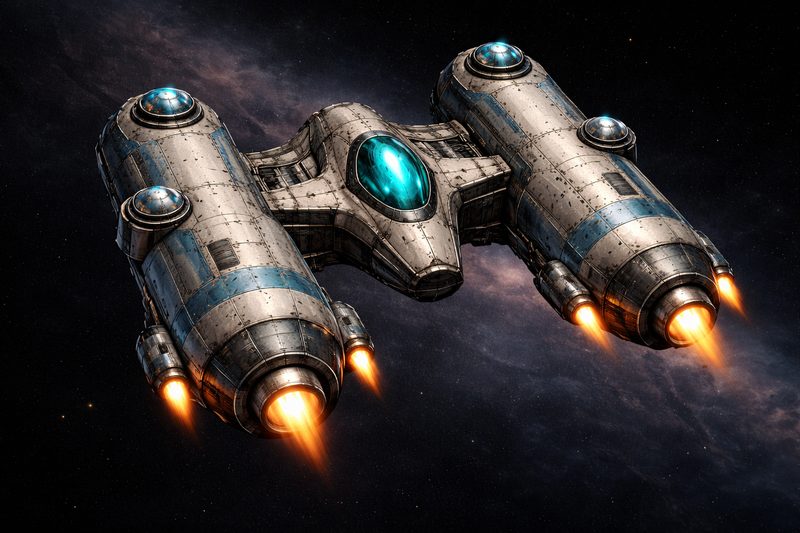
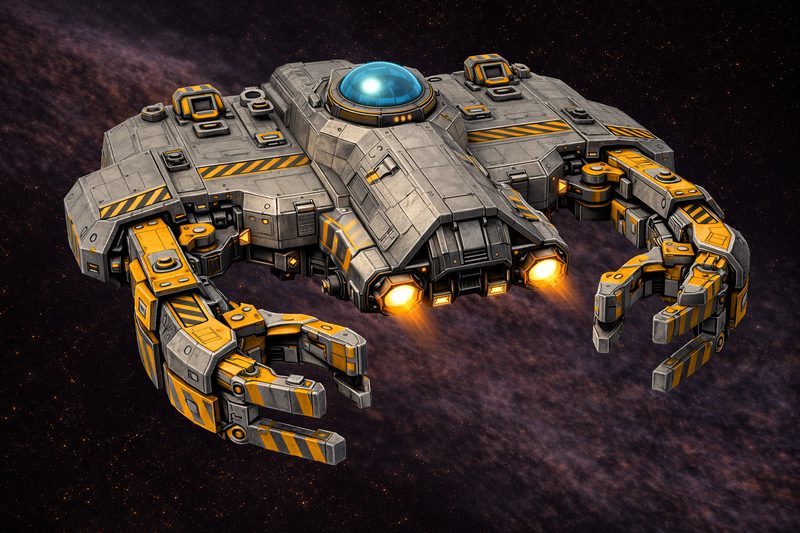
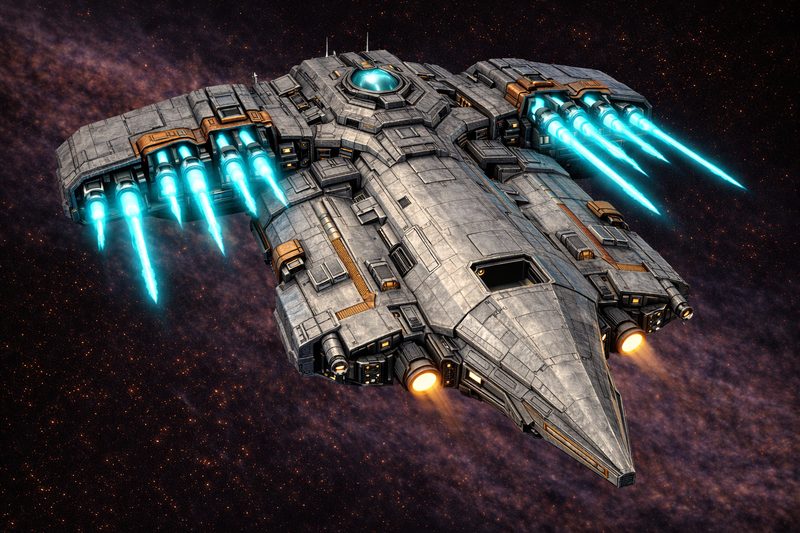
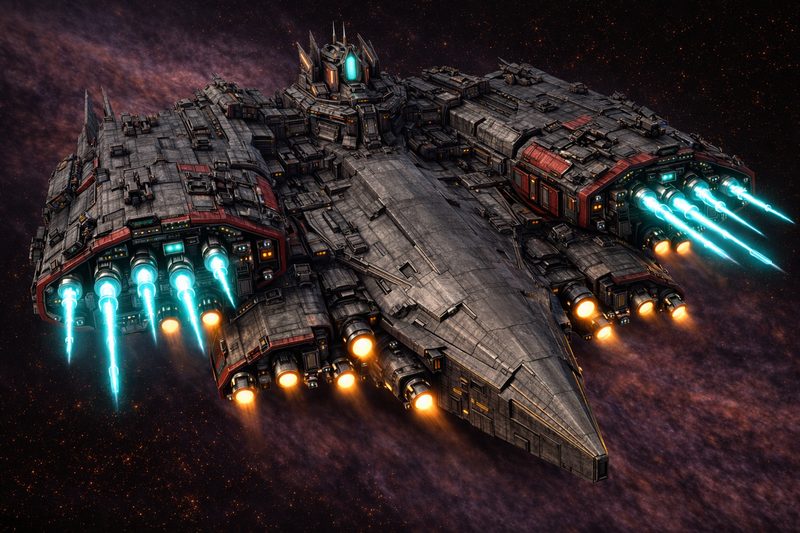
Hulls you will eventually command

Capitals do not slingshot and do not warp — they tear their own passage through subspace and burn antimatter doing it. Getting one anywhere is a plan, not a reaction.

Corvette hull renderCorvette
Reclaimer hull renderReclaimer
Harbinger capital hull renderHarbinger
Colossus capital hull renderColossus

Honest status: this is a playtest

Ringbound is in open alpha and the population is small. You will meet rough edges, and you will meet the developer — reports on Discord go straight to the person who can fix them.

Your progress is not wiped. There is no cash shop, nothing to buy, and builds, research and fleets keep moving on the server while you are away. You do not need to leave the tab open.

The beacon is still dark

Free, in your browser, no download. Five minutes to start and no rush after that.